

Antibiotics, Drugs & Pesticides Report
Key Highlights
Note on BLQ: When the report shows “BLQ,” it means the substance is either completely absent or undetected.
Note on LOQ: The smallest amount of a substance that a lab test can detect and measure accurately.
Chemical Contaminants: No antibiotics, banned substances, or pesticides detected—30+ pesticides tested, all BLQ (Below Limit of Quantification, meaning absent or undetected).
FSSR 2011 & NMT: Meaning of this is all these parameters are tested against NMT (Not More Than) a crucial abbreviation indicating the maximum permissible limit as per Food Safety and Standards Regulations, 2011 for contaminants, additives or specific components in food products.


Antibiotics, Drugs & Pesticides Report
Key Highlights
Note on BLQ: When the report shows “BLQ,” it means the substance is either completely absent or undetected.
Note on LOQ: The smallest amount of a substance that a lab test can detect and measure accurately.
Chemical Contaminants: No antibiotics, banned substances, or pesticides detected—30+ pesticides tested, all BLQ (Below Limit of Quantification, meaning absent or undetected).
FSSR 2011 & NMT: Meaning of this is all these parameters are tested against NMT (Not More Than) a crucial abbreviation indicating the maximum permissible limit as per Food Safety and Standards Regulations, 2011 for contaminants, additives or specific components in food products.


Antibiotics, Drugs & Pesticides Report
Key Highlights
Note on BLQ: When the report shows “BLQ,” it means the substance is either completely absent or undetected.
Note on LOQ: The smallest amount of a substance that a lab test can detect and measure accurately.
Chemical Contaminants: No antibiotics, banned substances, or pesticides detected—30+ pesticides tested, all BLQ (Below Limit of Quantification, meaning absent or undetected).
FSSR 2011 & NMT: Meaning of this is all these parameters are tested against NMT (Not More Than) a crucial abbreviation indicating the maximum permissible limit as per Food Safety and Standards Regulations, 2011 for contaminants, additives or specific components in food products.


Antibiotics, Drugs & Pesticides Report
Key Highlights
Note on BLQ: When the report shows “BLQ,” it means the substance is either completely absent or undetected.
Note on LOQ: The smallest amount of a substance that a lab test can detect and measure accurately.
Chemical Contaminants: No antibiotics, banned substances, or pesticides detected—30+ pesticides tested, all BLQ (Below Limit of Quantification, meaning absent or undetected).
FSSR 2011 & NMT: Meaning of this is all these parameters are tested against NMT (Not More Than) a crucial abbreviation indicating the maximum permissible limit as per Food Safety and Standards Regulations, 2011 for contaminants, additives or specific components in food products.


Antibiotics, Drugs & Pesticides Report
Key Highlights
Note on BLQ: When the report shows “BLQ,” it means the substance is either completely absent or undetected.
Note on LOQ: The smallest amount of a substance that a lab test can detect and measure accurately.
Chemical Contaminants: No antibiotics, banned substances, or pesticides detected—30+ pesticides tested, all BLQ (Below Limit of Quantification, meaning absent or undetected).
FSSR 2011 & NMT: Meaning of this is all these parameters are tested against NMT (Not More Than) a crucial abbreviation indicating the maximum permissible limit as per Food Safety and Standards Regulations, 2011 for contaminants, additives or specific components in food products.


Antibiotics, Drugs & Pesticides Report
Key Highlights
Note on BLQ: When the report shows “BLQ,” it means the substance is either completely absent or undetected.
Note on LOQ: The smallest amount of a substance that a lab test can detect and measure accurately.
Chemical Contaminants: No antibiotics, banned substances, or pesticides detected—30+ pesticides tested, all BLQ (Below Limit of Quantification, meaning absent or undetected).
FSSR 2011 & NMT: Meaning of this is all these parameters are tested against NMT (Not More Than) a crucial abbreviation indicating the maximum permissible limit as per Food Safety and Standards Regulations, 2011 for contaminants, additives or specific components in food products.


Antibiotics, Drugs & Pesticides Report
Key Highlights
Note on BLQ: When the report shows “BLQ,” it means the substance is either completely absent or undetected.
Note on LOQ: The smallest amount of a substance that a lab test can detect and measure accurately.
Chemical Contaminants: No antibiotics, banned substances, or pesticides detected—30+ pesticides tested, all BLQ (Below Limit of Quantification, meaning absent or undetected).
FSSR 2011 & NMT: Meaning of this is all these parameters are tested against NMT (Not More Than) a crucial abbreviation indicating the maximum permissible limit as per Food Safety and Standards Regulations, 2011 for contaminants, additives or specific components in food products.


Antibiotics, Drugs & Pesticides Report
Key Highlights
Note on BLQ: When the report shows “BLQ,” it means the substance is either completely absent or undetected.
Note on LOQ: The smallest amount of a substance that a lab test can detect and measure accurately.
Chemical Contaminants: No antibiotics, banned substances, or pesticides detected—30+ pesticides tested, all BLQ (Below Limit of Quantification, meaning absent or undetected).
FSSR 2011 & NMT: Meaning of this is all these parameters are tested against NMT (Not More Than) a crucial abbreviation indicating the maximum permissible limit as per Food Safety and Standards Regulations, 2011 for contaminants, additives or specific components in food products.


Antibiotics, Drugs & Pesticides Report
Key Highlights
Note on BLQ: When the report shows “BLQ,” it means the substance is either completely absent or undetected.
Note on LOQ: The smallest amount of a substance that a lab test can detect and measure accurately.
Chemical Contaminants: No antibiotics, banned substances, or pesticides detected—30+ pesticides tested, all BLQ (Below Limit of Quantification, meaning absent or undetected).
FSSR 2011 & NMT: Meaning of this is all these parameters are tested against NMT (Not More Than) a crucial abbreviation indicating the maximum permissible limit as per Food Safety and Standards Regulations, 2011 for contaminants, additives or specific components in food products.


Frequently Asked Questions (FAQ)
About the Lab Report & Testing
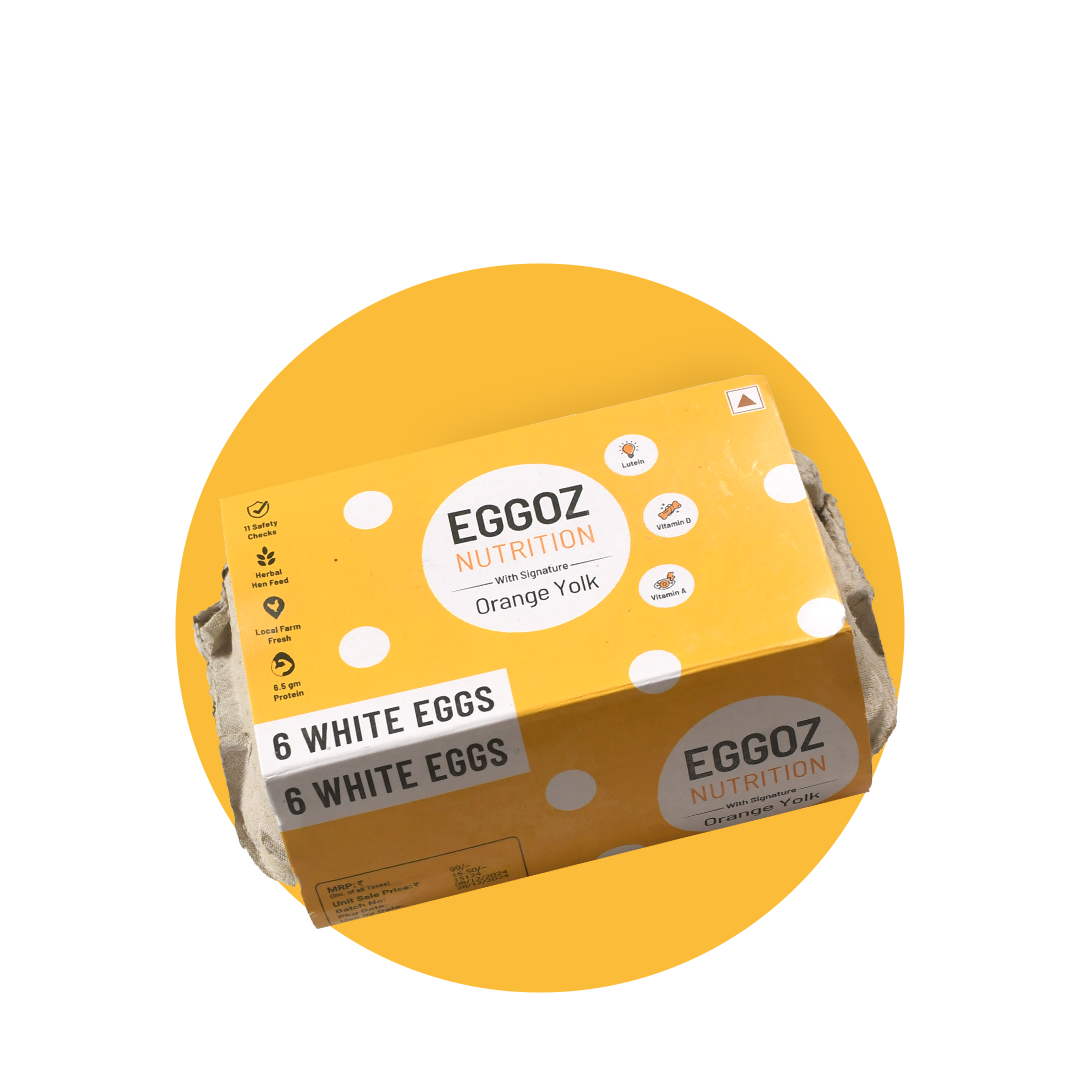
```This is a comprehensive safety and quality analysis of Nutrition White Eggs conducted by an accredited independent laboratory. The report verifies compliance with Indian Food Safety Standards (FSSR 2011) and confirms the product is safe for consumption.
The testing follows validated protocols including Indian Standards (IS), AOAC methods, HPLC, and LC-MS/MS — the same technologies used by FSSAI for official testing.
The lab evaluated microbiological safety, chemical composition, heavy metals, antibiotics, pesticides, natural toxins, and other contaminants using internationally accepted methods.
BLQ means “Below Limit of Quantification” - it means the substance is either completely absent or beyond the measuring scope of testing instruments. Essentially, undetectable/absent.
LOQ (Limit of Quantification) mean the smallest amount that can be measured with confidence. Is the lowest concentration of a substance that a laboratory test can reliably detect and accurately measure using a validated method.
White Eggs come in packs of 6, 10, and 30. They undergo 11 strict safety checks to ensure top quality. A 100g serving delivers >13g of protein, making them a strong daily nutrition source.
Brown Eggs are laid by breeds that naturally produce brown shells. They follow the same high safety and quality standards as all Eggoz eggs.
Everyday Eggs offer the same goodness and safety checks in a value pack of 30, with each egg weighing around 50g.
Test Results: Actual lab findings.
FSSR 2011 Protocol: Legal maximum limits for India.
Nutritional Composition
```Protein 13g- 13.5g, Fat 10.5g-11.5g, Energy 150 kcal-170 kcal— all within ideal ranges and reflect high-quality eggs.
Iron, calcium, selenium, and phosphorus — all essential for immunity, bone health, and energy metabolism.
Vitamins A, E, B12, and D — showing strong nutritional value.
Heavy Metals & Contaminants
```All heavy metals were undetectable (BLQ) except copper (which is safe and naturally occurring).
Birds naturally require copper. The detected amount is safe and nutritionally beneficial.
Antibiotics & Veterinary Residues
```No. All tested antibiotics were BLQ.
It ensures compliance with FSSAI rules and prevents antimicrobial resistance.
No. All banned antibiotics and substances tested were BLQ.
Pesticides
```No. Over 25 pesticides (including banned ones) were tested and all were BLQ.
Natural Toxins
```All tested natural toxins were BLQ.
Common Misconceptions
```Yes — as long as proper storage and handling are followed after purchase.
The eggs were clean, undamaged, and free from visible impurities.
Regulatory Standards
```India’s national food safety regulation — similar to FDA/EFSA standards. The eggs meet all limits.
IS Standards, AOAC methods, LC-MS/MS, GC-MS — all reliable and globally recognized.
