

Picture this: it's a sweltering June morning, you crack an egg into the pan for a quick omelette, and instead of that thick, jelly-like white hugging the yolk like a cozy blanket, it slips out and spreads across the pan like it's trying to escape the heat too. You blink. You check the expiry date. You wonder if your eggs have somehow developed main character energy and decided to run away from home. Relax, your eggs aren't rebelling, they're just reacting to summer the same way the rest of us do: a little melty, a little looser, and a lot less structured.
That watery, spread-out egg white is one of the most common kitchen mysteries during the hot months, and it turns out there's real food science behind it, not folklore, not a "bad batch," and (usually) not a safety issue. Let's crack this open.

So What's Actually Happening Inside the Shell?

A freshly laid egg white isn't uniform, it has two layers. There's a thick, gel-like inner layer that clings tightly around the yolk, and a thinner, looser layer around the outside. That thick, jelly texture comes from a protein network called ovomucin, which acts like a microscopic mesh holding water molecules in place.
According to ScienceInsights, the real culprit behind runny whites is a rise in pH inside the egg. As carbon dioxide slowly escapes through the shell's tiny pores, the egg's interior becomes more alkaline. This shift is described as the "intrinsic driving force" that breaks apart the ovomucin mesh, causing the thick white to collapse into a thinner, flatter liquid.
In other words, it's basic chemistry, not a defect. Every egg begins this journey the moment it's laid, the only question is how fast it travels down that road. And that's exactly where summer comes in.
Why Summer Speeds Everything Up
1. Heat is basically a fast-forward button
Temperature has an outsized effect on how quickly an egg ages. Storing eggs in high temperatures (and low humidity) speeds up the ageing process and causes whites to turn watery well before their printed expiry date.
Think of it like leaving butter on the counter versus in the fridge, heat simply accelerates whatever chemical process was already going to happen. For eggs, that means faster CO2 loss, faster pH rise, and a quicker breakdown of that protective ovomucin mesh.
2. Even the hens feel the heat
It's not only about your kitchen counter, the heat starts affecting egg quality even before the egg reaches you. High temperatures during a hen's laying cycle can directly cause thinner, watery whites, even in eggs from well-cared-for, healthy flocks.
Similarly, when eggs sit in a hot coop for a few hours before collection, the albumen begins thinning faster, heat-stressed hens and heat-stressed eggs go hand in hand.
3. The journey from farm to fridge matters
Every extra hour an egg spends outside a cool environment, in a delivery truck, on a warm shelf, or in your kitchen instead of the fridge, adds to that ageing clock. In peak summer, that clock simply ticks faster, which is why the same carton of eggs can look noticeably runnier in July than it would in January.
You can also read: https://www.eggoz.com/blogs/lifestyle/what-is-the-egg-cuticle-amp-why-it-matters-more-in-summer
Is a Runny Egg White Actually Unsafe to Eat?
Here's the reassuring part: a thin, watery white on its own is not a sign of spoilage. It's a natural, gradual process every egg goes through. The real red flags to watch for are different, a pink or iridescent sheen on the white, a sulfurous or rotten smell, or unusual discoloration. If your egg looks and smells normal, a runny white simply means it isn't at peak freshness, not that it's unsafe.
That said, runny whites can be a genuine kitchen annoyance. They spread thin in the pan, they're harder to poach into a neat shape, and they simply won't whip into stiff, glossy peaks for meringues or soufflés, because that airy structure depends on the very protein network that heat and time have already loosened.
How to Keep Your Eggs Firmer, Longer

- Refrigerate immediately: Cold storage dramatically slows CO2 loss and the pH rise that causes thinning, don't leave eggs on a warm counter or near the stove.
- Avoid temperature swings: Once refrigerated, keep eggs refrigerated. Moving eggs in and out of the fridge speeds up deterioration rather than slowing it.
- Buy closer to the source: The shorter the gap between the farm and your fridge, the less time heat has to work on the egg, freshness is really a race against the clock.
- For poaching: Strain the egg through a fine sieve for a few seconds before cooking, the thin, watery portion drains away, leaving the denser white behind.
- For everyday cooking: Scrambles, omelettes, and baking barely notice a runnier white once the egg is beaten, so don't stress over it for daily meals.
Conclusion
If runny whites are mostly a story about time and temperature, then the real fix isn't a kitchen hack, it's a shorter, cooler journey from hen to home. This is exactly the gap that Eggoz was built to close.
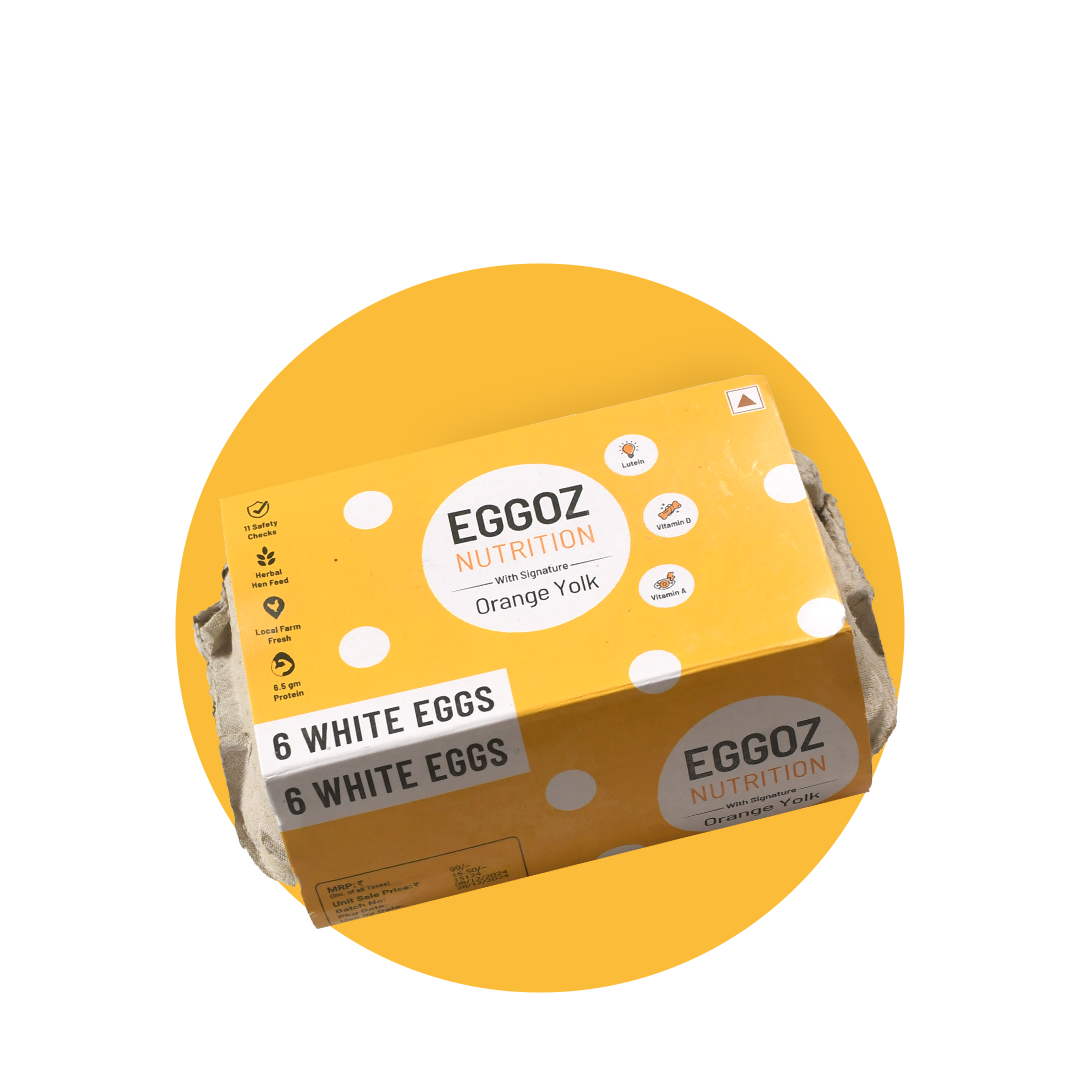
Eggoz eggs are collected, UV-sanitised, quality-graded, and packed within 24 hours of being laid, with every egg passing through 11 dedicated safety and freshness checks before it reaches your kitchen. You can even trace the exact farm your carton came from, right down to the batch code, on Eggoz's own traceability page.
So the next time your egg white looks a little too relaxed in the pan, remember: it's not you, and it's not always the egg either, it's the heat, the clock, and the journey the egg took to get to you. Choose freshness that's built to beat the summer, and let the science (and the yolk) speak for itself.
FAQs
1. Why do egg whites become watery only in summer?
Heat speeds up the natural chemical process inside an egg, carbon dioxide escapes faster, the internal pH rises quicker, and the protein network (ovomucin) that keeps the white thick breaks down sooner than it would in cooler weather.
2. Is it safe to eat an egg with a runny white?
Yes, in most cases. A thin white simply means the egg has aged a bit; it's not a sign of spoilage. Watch instead for a pink or iridescent tint or a foul smell, which are actual signs the egg has gone bad.
3. Can I still make meringue or whipped egg whites in summer?
It's harder with runnier eggs since whipping depends on that protein structure, but using the freshest, coldest eggs you can find, and keeping your bowl and beaters chilled, helps a lot.
4. Does refrigeration really make a difference?
Yes, significantly. Refrigerated eggs lose quality far more slowly than eggs kept at room temperature, especially in hot, humid conditions. Always refrigerate eggs promptly and consistently.
5. How can I tell if my egg is still fresh?
Try the float test: place the egg in a bowl of water. A fresh egg sinks and lies flat; an older egg stands upright or floats, since the air cell inside grows larger as the egg ages.
6. Do branded eggs like Eggoz stay fresher in summer than loose market eggs?
Generally, yes, because the biggest factor in freshness is time and temperature control. Eggs that reach you within 24 hours of being laid, through a proper cold chain, have far less time to age compared to loose eggs that may sit unrefrigerated for days or weeks before reaching your kitchen.
